“. . . Companies today aren’t managing their employees’ careers; knowledge workers must, effectively, be their own chief executive officers. It’s up to you to carve out your place, to know when to change course, and to keep yourself engaged and productive during a work life that may span some 50 years. To do those things well, you’ll need to cultivate a deep understanding of yourself—not only what your strengths and weaknesses are but also how you learn, how you work with others; what your values are, and where you can make the greatest contribution. Because only when you operate from strengths can you achieve true excellence.”
–Peter Drucker, Managing Oneself, 1999
One of my pages on this blog is titled Avis in Action; this week’s post is evidence for such a self-asserting description.
This May I traveled to my 21st country–Budapest, Hungary.

Most literature discussing today’s professional lists multicultural and travel experience as necessary traits for desirable and viable employees. Well, in this area, I do not fall short. After teaching in a Rome Studies Program, participating in a Fulbright Summer in West Africa, speaking for 17 days in Namibia, South Africa and now adding a 3.5 year stint in Morocco, travel is central to my personal and professional life. I have changed for the better, and I have much to offer my future employers because of my exposure to 20 different countries.
Second, while presenting a conference paper in Belgrade, Serbia a few weeks ago,
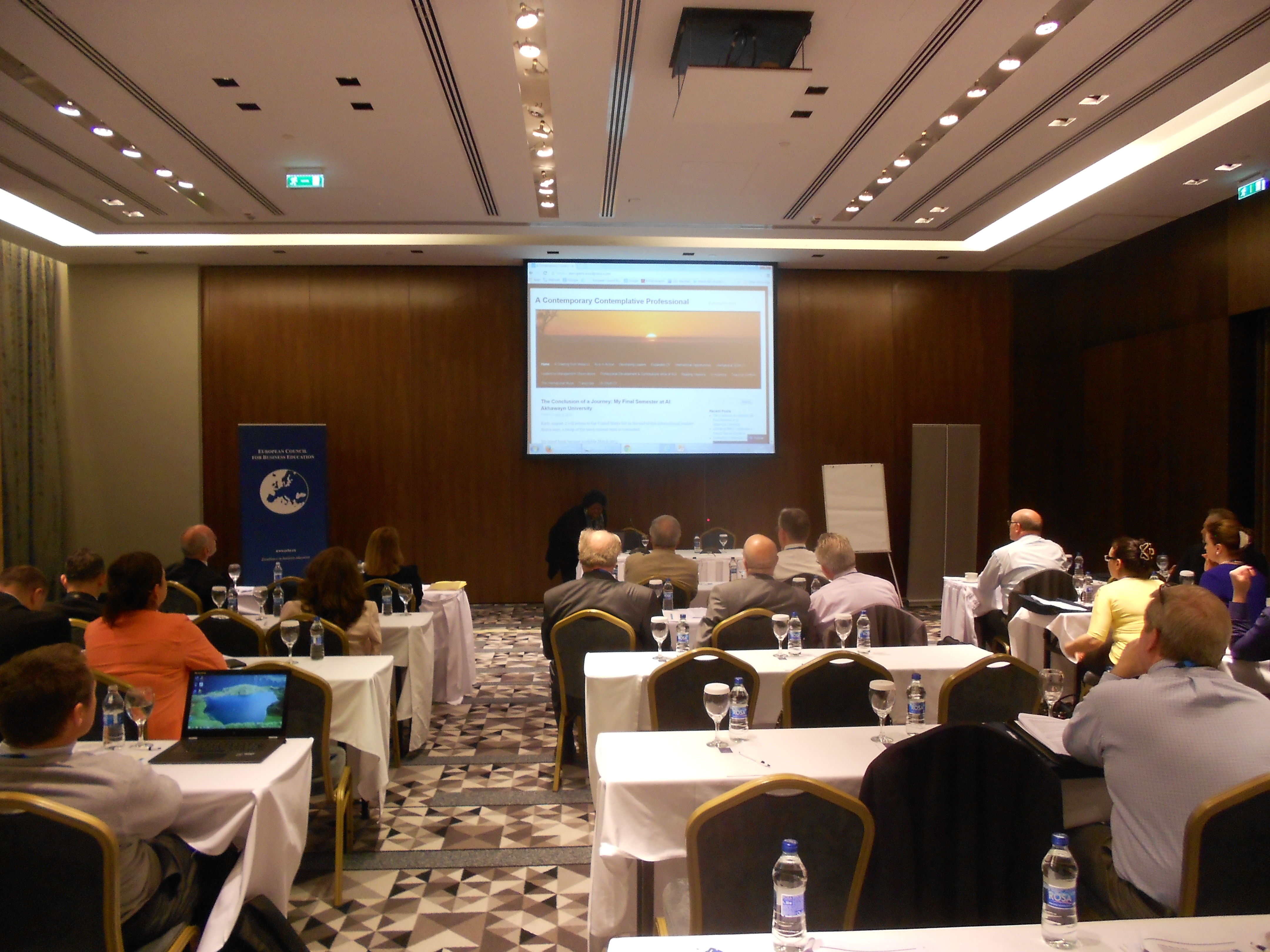
 I received an email from one of my graduate students thanking me for my leadership as I guided his team in writing a paper of conference quality in my graduate Organizational Behavior and Leadership course. The student’s email informed me of his team’s paper acceptance for an academic conference in Turkey. This was a tremendous reward for me as well; as an educator who truly cares about her students and who not only believes in them but charts a path in my classroom and through my pedagogy that sets them up for success, the email was evidence that things are working well in my classes. Here is a clear example of how I was able to plant the seeds of scholarly engagement and exemplify it as well as I responded to my student’s email from Belgrade–where I networked and presented my own paper at the European Council for Business Education Conference.
Next, last summer I had the opportunity to teach Entrepreneurship for the first time. I had no idea I would enjoy the class so much, although I have owned several businesses and am engaged in developing a speaking engagement schedule regarding my time in Africa, a book signing tour supporting my latest publication, and establishing retreat speaking engagements as I return to the States to continue my own entrepreneurial (including social entrepreneurship) ventures. But what has become most rewarding in the summer Entrepreneurship class is that I have manged to take a course design that supported 10 students this past spring to transform the same highly participatory curriculum to support 34 students in a 6-week summer course. Granted, we have completed only the first week of the summer course, but I have no doubt this first week has set my students up for success–academically and as future entrepreneurs or highly desirable employees who possess a spirit of entrepreneurship. The initial evidence resides in the individual elevator speeches shared to form venture teams day 4. I am determined not to allow large class sizes cheat individual student learning and needs–we all have learning preferences (and styles) and it is my objective to accommodate as many as possible while affording my students the opportunities to engage in the roles, functions, and skills attributed to managers. Does my style of teaching come at a personal cost in my time and effort? Yes. But is it worth it? Absolutely! The number of students in a class should not decrease the quality or dictate my preferred pedagogical style. Planning, organizing, leading, and controlling coupled with attention to student-centered learning creates a win-win situation. Yes, I am an educator but I have gleaned much from my years as a manager and leader to prepare future managers and leaders.
Fourth, this week I have been called upon to serve as a reader for an Executive MBA student’s thesis. As I took Sunday morning to complete the first reading of the document, I found it refreshing to see how one of my specific interests–organizational behavior–has been explored in a Moroccan context through the student’s case study. It is a reminder that as an educator in this country the contemporary theory introduced in the classroom is explored and hopefully employed in the work settings of our students, leaving a legacy of contribution.
Finally, my part-time graduate MBA students have been truly amazing this summer. They have excelled in the curriculum and the expected deliverables. Drawing off of their work experience and instituting just enough involvement and repetition, especially in a short learning time frame, have revealed comparable quality in outcome between a 16-week graduate course and a three-weekend graduate fast-track course. In Casablanca there has truly been a partnership between my students’ efforts, intelligence, commitment, and my teaching and previous experience as a manager. Theory and practice in this class has formed a productive bond at the Al Akhawayn education site at Technopark in Casablanca where both Executive MBA and Part-time MBA classes take place.

After reading this post, one can clearly see I love teaching and I have no reservation about celebrating the efforts or accomplishments of my students and even my own endeavors in the classroom. To teach well is to invest in the future of another–another CEO, another mother, another father, another board member, another NGO leader, another scientist, and the list goes on.
A previous Dean said to me, “You are really an educator.” While I at the time of his uttering pondered what others were, today I can simply say–“Without reservation, Yes, I am.”
 Avis
Avis 