Categories
Uncategorized

Statement of Administrative Philosophy

Being an administrator in an academic setting means accepting the responsibility that comes with an important role which serves students, faculty, staff, the institution and the community.  Consequently the following shapes my philosophy:

Receptive

An administrator wears many hats and must interact with a host of individuals who bring ideas, concerns, opportunities, and complaints that represent their interest.  As an administrator listening and gleaning significance is most important and adds to relationship building as well as informed action and/or response.

Visionary

Understanding where a program, discipline or the institution is and its internal and external strengths and challenges, prepares an administrator to contribute responsibly.  The objective is not to remain where you are, whether it’s good or bad, but to progress with the times and in some situations lead the progress.

Innovative

Administrators do not have to reinvent the wheel, but they must critically create to ignite energy, enthusiasm, and challenge the most difficult of situations.

Strategic

Assessing, interpreting, defining, organizing, planning, leading, and controlling are central functions of an administrator and the latter actions are completed with great thought, clarity, and solicited engagement.

Collaborative and Inclusive

Acting alone negates the very administrative role one has agreed to uphold in an educational setting that includes thinkers and doers–people well prepared to participate. As an administrator, it is my responsibility to facilitate the greatness around me.

Participatory

Sitting on the sidelines is not an option.  An administrator is always representing someone or something, so engagement is mandatory for not only representation but clarity on the issues at stake.

A Philosophy that has Supported Action

  • Engaged in scholarly activities like a Summer Fulbright in Senegal West Africa; conference presentations at Harvard, in Belgrade Serbia, in Austria, and a host of settings in the United States; and several publications from book review articles to book publications
  • Utilized a spirit of innovation, entrepreneurship, and creativity to make viable campus contributions that stregthen program awareness, sustainability, and contribution
  • Enhanced leadership competencies by directing a campus leadership development institute and its first annual conference
  • Strengthened diversity competencies via travel to 21 countries to-date, an abroad summer Fulbright, and two international teaching opportunities
  • Collaborated with Vice Presidents over Financial Affairs, Student Affairs, and Academic Affairs
  • Developed and supervised campus and community events and programs
  • Supervised over 150 employees
  • Oversaw instruction at multiple campuses, including dual credit courses in high school settings
  • Developed teaching and class schedules
  • Facilitated master syllabi and ILO assessment development
  • Evaluated instructors
  • Mentored new faculty
  • Wrote grants, program reviews, and other internal and external reports
  • Managed budgets
  • Obtained graduate degrees in English and management
Categories
Uncategorized

A Return to the Writing Classroom

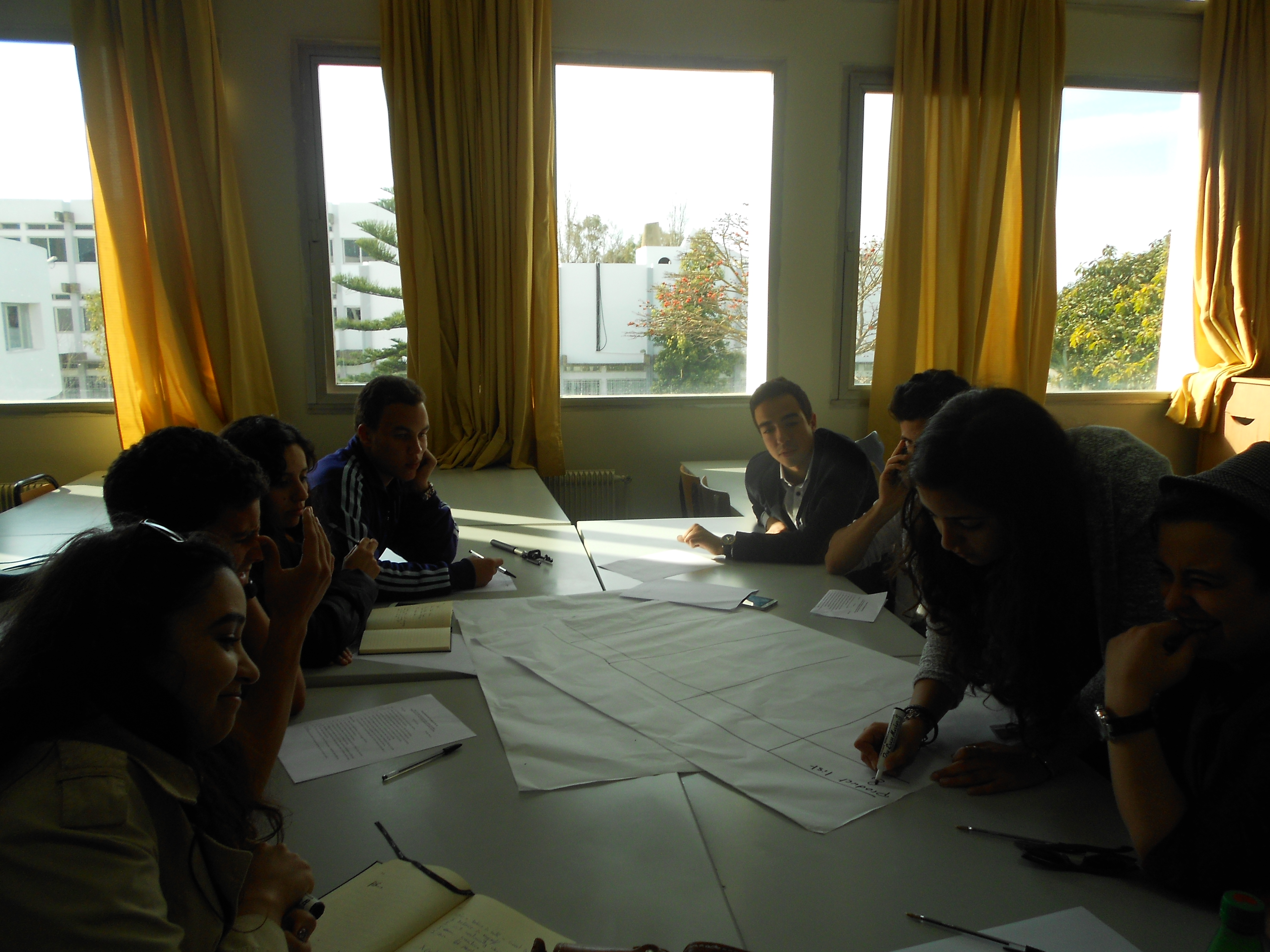
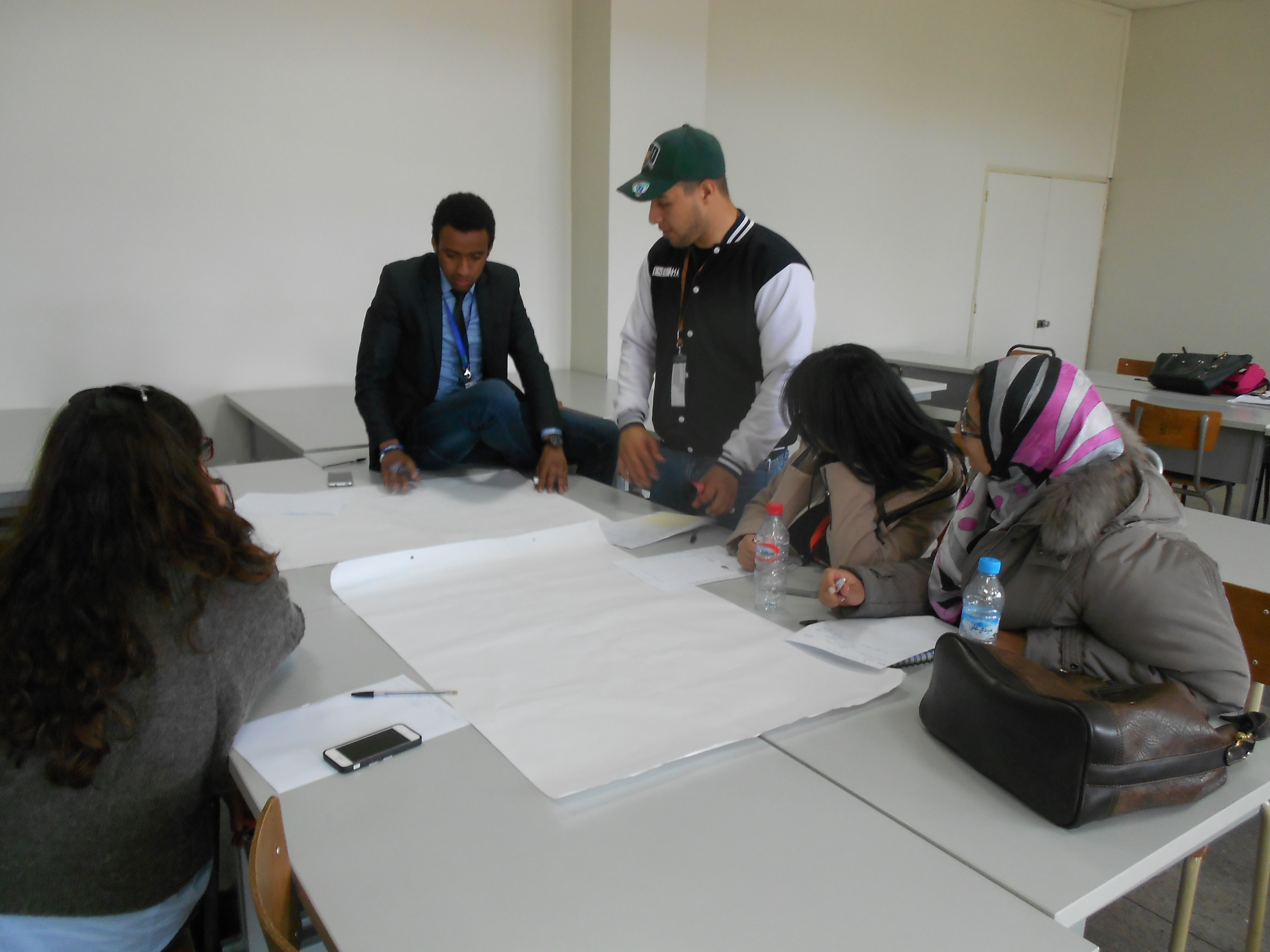
March 5, 2016, I returned to North Lake College to host a writing workshop for Mr. Guy Melton’s Upward Bound students.  It was a wonderful Saturday filled with discussion, drafts, sharing, play with color, and photos from the 21 countries I’ve visited.

During the workshop, students were asked to

  1. Portray their view of the writing process through a visual
  2. Develop a rough draft using the following prompt:  The Value of Travel
  3. Tour my photo gallery and develop a list of insightful words that come to mind during the tour
  4. Develop a revised essay
  5. Read each member’s essay and select the strongest revision

Since my return from Africa, this was my first time back in the U.S. classroom, and I loved it.  My international teaching experience over a period of three and a half years breathed renewal into my teaching and into my professional growth.

Evidently, the students enjoyed the experience as well, for they have requested my return.

This is an honor for an educator but an even greater honor is to showcase the work of one of the student attendees

An Essay by Oscar Zambrano

Oscar Zambrano, Essay on Traveling

Categories
Uncategorized

eLearning & The Nonprofit Sector

This past February, I gave a presentation on launching an eLearning program for a Dallas organization.  The presentation materials included the following documents.

PowerPoint

Launching a Successful eLearning

Failures to Avoid 

Failures

Great eLearning Quotes

eLearning Quotes

My background to support such a presentation is as follows:

  • Serving as the first Daedalus administrator for Texas A&M University–Corpus Christi’s composition courses
  • Developing and teaching the first online World Religion class for North Lake College
  • Completing the MA in Organizational Management from Ashford University through its online program
  • Teaching teamwork
  • Designing a unit on continous learning
  • Teaching four management hybrid classes at Al Akhawayn University
  • Maintaining two blogs
  • Taking WebCT courses during my doctoral studies
  • Completing training and technology courses at Bowling Green State University


Categories
Uncategorized

Multiculturalism & Rupert the 21st Century Educator


“One of the most sincere forms of respect is actually listening
to what another has to say.”
——-Bryant H. McGill

Most recently, I have been asked the following question, with some variation, in three different settings:

What have you done in order to broaden your understanding and engagement with multiculturalism? 

This is a question that I have enjoyed responding to, for unlike most colleagues at a similar stage in their career, I think this question allows me to not only differentiate myself but it allows one to garner the connection and contribution I will make in the college classroom and among diverse staff, faculty, and administrators.

The above is only noteworthy if the institution itself values and embraces multiculturalism among its faculty as well as its student body.

Below is a summary of key facts I have shared with those who have posed the question.

I have . . .

  • traveled to 21 countries to-date, most often alone and thus required to interact with locals to navigate and enjoy the culture and the people
  • taught in a Rome Studies Program, taking some 34 U.S. students to Italy with three other faculty members
  • participated in a Turkey Summer Seminar with a dozen or so Moroccan students, a Canadian professor, and an American professor
  • participated in a Summer Senegal, West Africa Fulbright that included an immersion into the religion, language, food, art, history, and traditions of the country
  • hosted a series of lectures in Namibia at the invitation of one of my composition students at the conclusion of lecture on the rhetorical situation
  • resigned from a teaching position at the conclusion of the fall 2009 semester to draft another book as I traveled 12 countries in Europe–a book that was published in 2015
  • taught for 3.5 years in Morocco at a university with close ties to the University of Texas and one that had over a dozen countries represented among its teaching faculty alone
  • honored an invitation to speak in Sweden to a community organization whose members represented a host of countries in Africa
  • presented a conference paper in Belgrade, Serbia whose participants were from all over the world
  • developed a leadership conference in a developing country and presented the endeavor at a 2015 conference at Harvard
  • explored multinational business and management through a post-graduate degree in Organizational Management with an International Focus
  • shared my travel experiences through an extensive photo gallery that I have included in book signing events
  • taught in a college setting where over 40 countries were represented
  • taught World Religion and incorporated field trips to settings that complemented several different religions
  • included diverse readings in my writing classes to expose students to different cultures
  • asked students to write papers sharing something they identify as unique to their culture and then placed students in groups to read several of these informative essays
  • developed an international entrepreneurial showcase to garner the differences in marketing, products, and services specific to a particular culture
  • become very intentional about exploring the challenges study abroad students may experience in a host country specifically in view of my own decision to teach in Africa where I was alone and unprotected or guided by some third party organization

In summation, my 4.5 degrees have taught me a lot, but the experiences and opportunities above have enriched me more than I ever expected and such enrichment has come through people and their history and experiences as well as my genuine respect for people, regardless of their gender, ethnicity, or the color of their skin.  Such awareness and appreciation only strengthens my people, teaching,and critical awareness skills.

These are three traits I am hopeful my employer, colleagues, students, and community members will value.

“Have a big enough heart to love unconditionally, and a broad enough mind to embrace the differences that make each of us unique.”
——-D. B. Harrop


Categories
Uncategorized

How to Set Your Employees, Customers, and Organization Up for Failure—A Thought on Organizational Management

Is this a strange title?

Who would want aspects of their business or non-profit organization to fail?

No one!

But the irony is poor leadership, poor planning, and incompetent employees engage in the do nots below every day, creating anxiety for employees who need jobs and customers who desire quality services and products.

As a professor of organizational management, I have come to realize that many leaders and managers do not realize how they are creating a poor culture by the things they do or fail to do.  Actions and inactions of management communicate volumes to employees and shape performance.

When an organization grows too fast, when management is more concerned about the dollar than the quality of their business, or when unskilled and misguided people are promoted, in charge, or the favorites and receive unwarranted opportunities these do nots become every day practices.

  • Do not screen your applicants. Open the flood gates and fill those vacant positions.
  • Do not administer an applicable testing instrument to ensure competent skills are present in potential employees. Use any test to simply say we tested the pre-employees.
  • Do not place qualified trainers before your new employees. Promote a friend.  How important is training really?
  • Do not develop a training curriculum that respects the job to be performed. Load the curriculum with history, facts and irrelevant games; 15% of applicable job content is enough.
  • Do not give floor time to new employees before interacting with customers. Throw them to the wolves. That’s how we learned.
  • Do not promote qualified supervisors. Anybody can supervise; no special skills or knowledge required.
  • Do not talk about making money but make sure everything the employee does ensures that the money is coming in, even if the actions are unethical or irresponsible. We are here for the money, right!
  • Do not create a healthy coaching environment to help people improve. If an employee messes up, get him or her out as quick as possible.  It costs money to keep them a part of the team.

If you have been a customer in almost any context and you found the service horrific or the employees rude, disinterested, or ignorant of your needs; avoid blaming the employee too quickly.  Anyone of these do nots may have contributed to your experience and not one of the variables is controlled by the employee who simply applied for a job and was hired.

Categories
Uncategorized

Never a Dull Moment for the Attentive Writing Educator in a Community College

One of my favorite units to teach in the writing class is the rhetorical situation.  As a result, I personally have a practice of analyzing my audiences in most all situations.

Though I have wonderful senior citizens in my family and in my spiritual contexts, most recently I have become acquainted with a new senior community–people over 65 seeking health insurance.

The diversity among this population is fascinating.  With so many years on this earth there is an abounding presence of wisdom among seniors–if we are patient enough to uncover the treasure.  Yet, regardless of their wisdom, their time on this earth demands respect.

What does all of this mean for a writing teacher?

With 10,000 people turning 65 every day for at least the next 18 years, surely many more senior citizens will enter the college classroom (I am already planning the topics I would like to study once I reach my late 70s and life slows down a little.).

Given the insight above and the need to create strategies of engagement and interesting assignments, the college writing instructor must not only consider the 16 year old AP student entering college early, the father or mother squeezing in a course or two after work, or the recently graduated C- high school student who is not sure what he or she wants to be in the future but the attentive writing teacher must also consider the senior citizen who walks in the classroom with many years of experience, wisdom, insight, and contribution.

The task of the writing teacher is not easy but it certainly makes for an interesting learning environment, for all our students deserve attention and excellence.

There are no dull moments in striving to be an excellent educator.   I think this is why I love education!

Categories
Uncategorized

Peter Drucker and My Summer 2015 Update

“. . .  Companies today aren’t managing their employees’ careers; knowledge workers must, effectively, be their own chief executive officers.  It’s up to you to carve out your place, to know when to change course, and to keep yourself engaged and productive during a work life that may span some 50 years.  To do those things well, you’ll need to cultivate a deep understanding of yourself—not only what your strengths and weaknesses are but also how you learn, how you work with others; what your values are, and where you can make the greatest contribution.  Because only when you operate from strengths can you achieve true excellence.”

–Peter Drucker, Managing Oneself, 1999

One of my pages on this blog is titled Avis in Action; this  week’s post is evidence for such a self-asserting description.

This May I traveled to my 21st country–Budapest, Hungary.

Varosliget Restaurant

Most literature discussing today’s professional lists multicultural and travel experience as necessary traits for desirable and viable employees.  Well, in this area, I do not fall short.  After teaching in a Rome Studies Program, participating in a Fulbright Summer in West Africa, speaking for 17 days in Namibia, South Africa and now adding a 3.5 year stint in Morocco, travel is central to my personal and professional life.  I have changed for the better, and I have much to offer my future employers because of my exposure to 20 different countries.

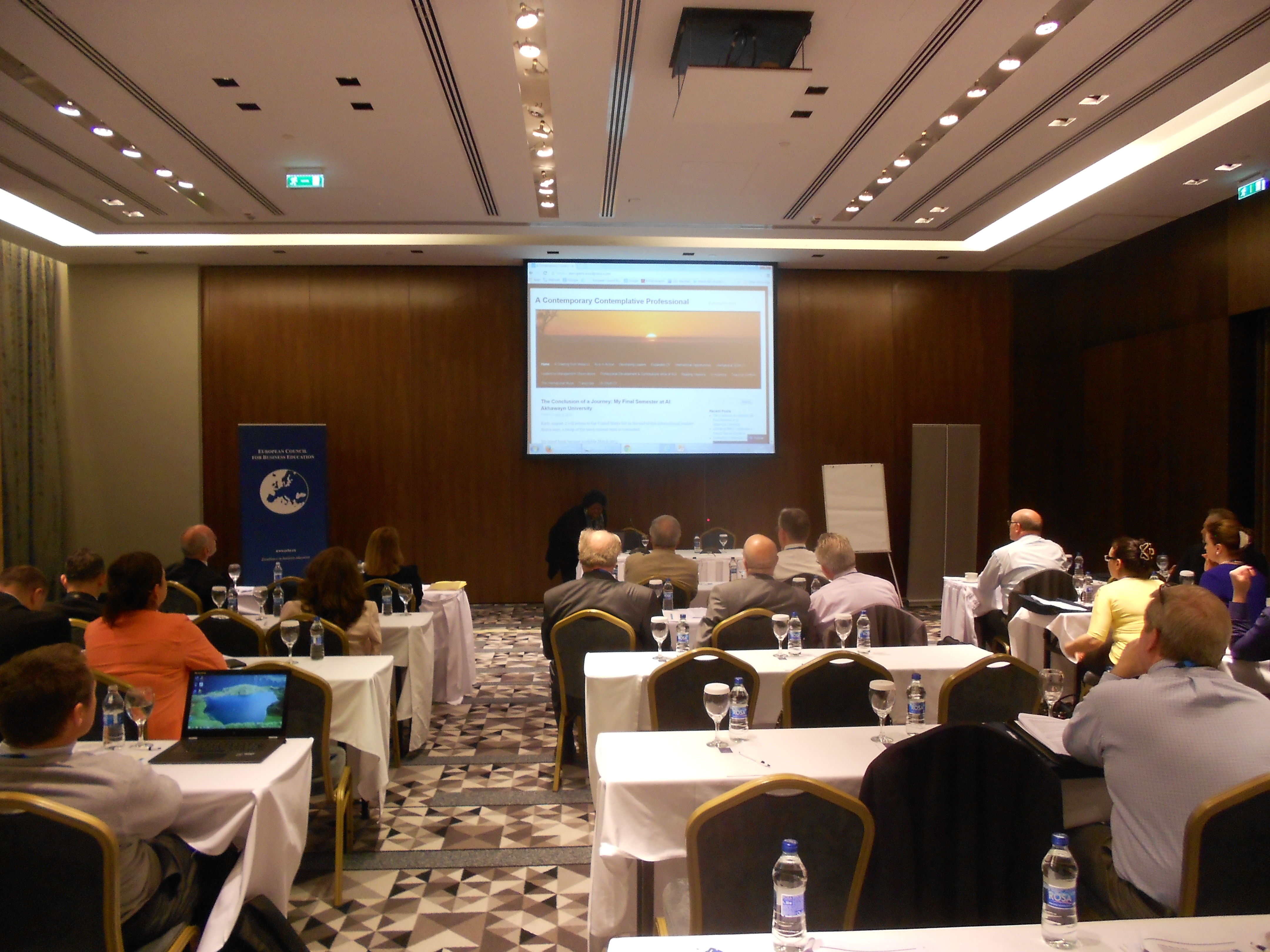
Second, while presenting a conference paper in Belgrade, Serbia a few weeks ago,

Belgrade Serbia May 2015   I received an email from one of my graduate students thanking me for my leadership as I guided his team in writing a paper of conference quality  in my graduate Organizational Behavior and Leadership course.  The student’s email informed me of his team’s paper acceptance for an academic conference in Turkey.  This was a tremendous reward for me as well; as  an educator who truly cares about her students and who not only believes in them but charts a path in my classroom and through my pedagogy that sets them up for success, the email was evidence that things are working well in my classes.  Here is a clear example of how I was able to plant the seeds of scholarly engagement and exemplify it as well as I responded to my student’s email from Belgrade–where I networked and presented my own paper at the European Council for Business Education Conference.

Serbia 2015

Next, last summer I had the opportunity to teach Entrepreneurship for the first time.  I had no idea I would enjoy the class so much, although I have owned several businesses and am engaged in developing a speaking engagement schedule regarding my time in Africa, a book signing tour supporting my latest publication, and establishing retreat speaking engagements as I return to the States to continue my own entrepreneurial (including social  entrepreneurship) ventures.  But what has become most rewarding in the summer Entrepreneurship class is that I have manged to take a course design that supported 10 students this past spring to transform the same highly participatory curriculum to support 34 students in a 6-week summer course.  Granted, we have completed only the first week of the summer course, but I have no doubt this first week has set my students up for success–academically and as future entrepreneurs or highly desirable employees who possess a spirit of entrepreneurship.  The initial evidence resides in the individual elevator speeches shared  to form venture teams day 4.  I am determined not to allow large class sizes  cheat individual student learning and needs–we all have learning preferences (and styles) and it is my objective to accommodate as many as possible while affording my students the opportunities to engage in the roles, functions, and skills attributed to managers.  Does my style of teaching come at a personal cost in my time and effort?  Yes.  But is it worth it?  Absolutely!  The number of students in a class should not decrease the quality or dictate my preferred pedagogical style.  Planning, organizing, leading, and controlling coupled with attention to student-centered learning creates a win-win situation.  Yes, I am  an educator but I have gleaned much from my years as a manager and leader to prepare future managers and leaders.

Fourth, this week I have been called upon to serve as a reader for an Executive MBA student’s thesis.  As I took Sunday morning to complete the first reading of the document, I found it refreshing to see how one of my specific interests–organizational behavior–has been explored in a Moroccan context through the student’s case study.  It is a reminder that as an educator in this country the contemporary theory introduced in the classroom is explored and hopefully employed in the work settings of our students, leaving a legacy of contribution.

Finally, my part-time graduate MBA students have been truly amazing this summer.  They have excelled in the curriculum and the expected deliverables.  Drawing off of their work experience and instituting just enough involvement and repetition, especially in a short learning time frame, have revealed comparable quality in outcome between a 16-week graduate course and a three-weekend graduate fast-track course.  In Casablanca there has truly been a partnership between my students’ efforts, intelligence, commitment, and my teaching and previous experience as a manager.  Theory and practice in this class has formed a productive bond at the Al Akhawayn education site at Technopark in Casablanca where both Executive MBA and Part-time MBA classes take place.

AUI at Technopark in Casablanca

After reading this post, one can clearly see I love teaching and I have no reservation about celebrating the efforts or accomplishments of my students and even my own endeavors in the classroom.  To teach well is to invest in the future of another–another CEO, another mother, another father, another board member, another NGO leader, another scientist, and the list goes on.

A previous Dean said to me, “You are really an educator.”  While I at the time of his uttering pondered what others were, today I can simply say–“Without reservation, Yes, I am.”

Categories
Uncategorized

The Conclusion of a Journey: My Final Semester at Al Akhawayn University

Early August, I will return to the United States but as the end of this international journey draws near, a recap of the most current term is warranted.

My latest book became available March 2015.

Here is one of my favorite passages in the text:

For those who shoulder tremendous public responsibilities, responsible for the lives of many, the words of Matthew Henry are warranted . . .  :  ‘Secret prayer must be made secretly.  Those that have the most business in public, and of the best kind, must sometimes be alone with God.’

Silence, stillness, and solitude set the stage for a deeper yearning and understanding of God, and thus an understanding of how we are to present ourselves and conduct the business of life among, for, and with others.

MEANINGFUL MOMENTS

The following article is presently under review :

The Rich Annotated Bibliography as a Critical Component

in

Research Writing for Business Courses

A recent entrepreneurship class has prompted new enthusiasm for teaching career.  Because of their outstanding work, we hosted an exhibit to display not only their process and the curriculum in place but their final portfolios–a well-documented guide that will  take them into their future ventures.  The photo below is a snapshot of one scene during a great event.

Rupert's Entrepreneurship Class, May 2015

Entrepreneurship class students displayed and discussed their innovative business ideas and plans, enabling the visiting audience to connect to the daily creative life of the classroom.

Al Akhawayn University in Ifrane, 2015

During spring break, I traveled to Boston to present a paper at Harvard.  The topic was the First Annual Leadership Conference hosted at Al Akhawayn University under my direction.

spring 2015 006

May 2015 I will present a paper in Belgrade, Serbia through the European Council for Business Education Conference.  The topic is the Electronic Portfolio, an employment and educational resource that enhances the opportunities to cross, enter, and engage in diverse industries and geographic regions.

Serbia
Serbia

The Rabat Youth to Business Forum took place in Morocco and I facilitated a workshop on the Leading Entrepreneur.  It was a highly engaging session.  The international student organization AIESEC develops student leaders around the world.  I have personally had two AIESEC interns through the Leadership Development Institute at Al Akhawayn University; I was fortunate to work with these disciplined, committed, and professional individuals, so when the AISECers at my institution asked me to participate in Rabat, I could not decline.

spring 2015 013spring 2015 012

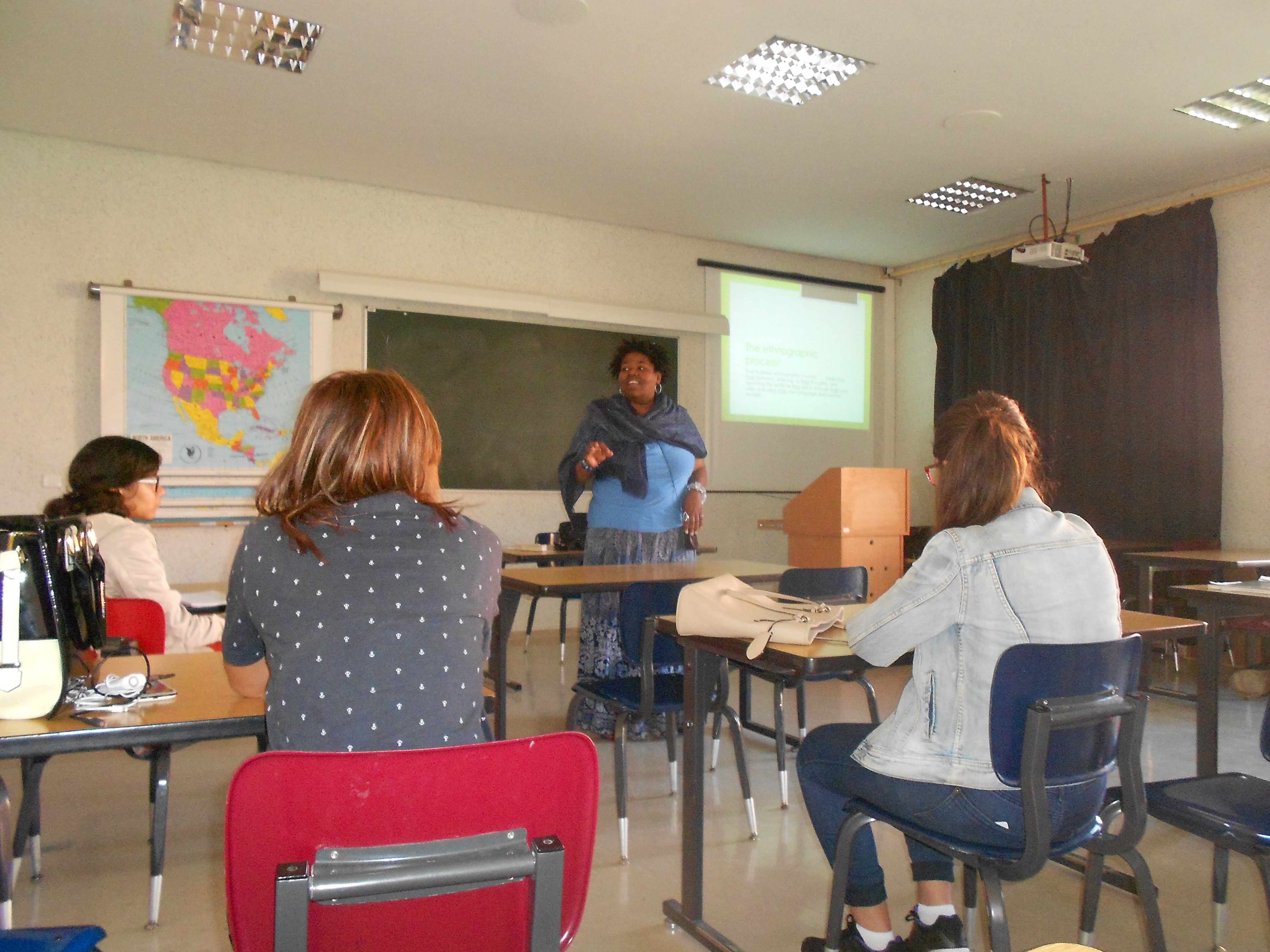
Teaching a graduate OB class which included qualitative field research afforded an opportunity to guest lecture early April in an Introduction to Anthropology course in the School of Humanities and Social Sciences.  The lecture focused on Business Anthropology.

spring 2015 016

Though the semester began with a slip on the ice and a broken ankle; the latter afforded the opportunity to return to online teaching for the first month of the spring semester. I forgot how rewarding this teaching and learning experience could be and my Moroccan students, for the first time, experienced the possibilities of distance learning for future graduate education or certifications.

The graduate students are engaged in informative Moroccan organizational research and the Principles of Management classes have developed a collection of 72 online videos to support management education and engaged in team research, exploring Moroccan management practices.

Finally, I had another opportunity this February to teach graduate students enrolled in AUI’s Casablanca Executive Education Center’s Executive MBA Program; May 15, 16, and 17, I began a three-weekend Part-time MBA class; both classes address organizational behavior and leadership.  Teaching professionals supports rich dialogue and contemporary issues that I may take back to my undergraduate business students.

Overall, it has been a semester that has been fully complemented by outstanding opportunities and contributions; I can think of no better way to conclude an international teaching experience.

Categories
Uncategorized

Attending PREM Conference, a Untied Nations Initiative

This past week, I attended a cutting edge discussion addressing women in leadership; revamping the educational preparation of contemporary business students; improving attention to ethics, social responsibility in business education; and advocating collaborations between academics and the corporate world.  The topics not only support current projects I am working on, my own pedagogical practices, leadership interests but personal perspectives as a professional in a globally connected world.

The event was the Middle East North Africa Region (MENA) regional PRME Conference held in Casablanca.  The Principles for Responsible Management Education (PRME) are a United Nations-supported initiative whose mission is to inspire and champion responsible management education, research and thought leadership globally.

Educators of future business leaders are charged with creating classrooms, teaching strategies, and assignments that honor the following six principles:

Principle 1 | Purpose: We will develop the capabilities of students to be future generators of sustainable value for business and society at large and to work for an inclusive and sustainable global economy.

PRME Principle 2
Principle 2 | Values: We will incorporate into our academic activities and curricula the values of global social responsibility as portrayed in international initiatives such as the United Nations Global Compact.

PRME Principle 3
Principle 3 | Method: We will create educational frameworks, materials, processes and environments that enable effective learning experiences for responsible leadership.

PRME Principle 4
Principle 4 | Research: We will engage in conceptual and empirical research that advances our understanding about the role, dynamics, and impact of corporations in the creation of sustainable social, environmental and economic value.

PRME Principle 5
Principle 5 | Partnership: We will interact with managers of business corporations to extend our knowledge of their challenges in meeting social and environmental responsibilities and to explore jointly effective approaches to meeting these challenges.

PRME Principle 6
Principle 6 | Dialogue: We will facilitate and support dialog and debate among educators, students, business, government, consumers, media, civil society organisations and other interested groups and stakeholders on critical issues related to global social responsibility and sustainability.

The above list may be found at the following PRME website: http://www.unprme.org/about-prme/the-six-principles.php

Categories
Uncategorized

Leadership Conferences Continue In Morocco

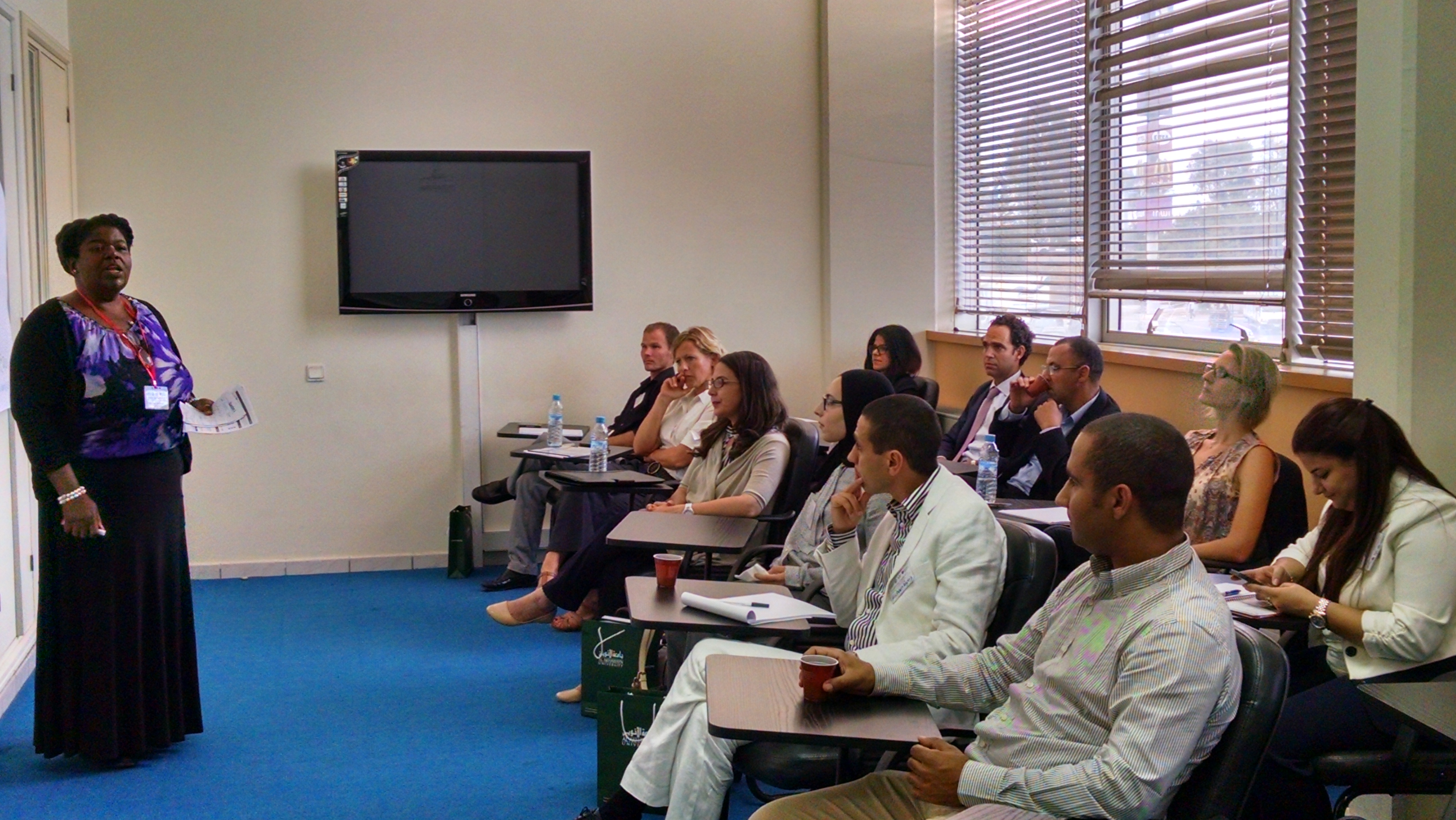
Rupert Speaks at Leadership Conference in Casablanca, September 2014

Casablanca Leadership Conference Presenter

Following in the steps of the First Annual Leadership Conference at Al Akhawayn University (AUI), the Executive Education Center through the Graduate AUI Executive MBA program hosts a leadership conference.

Admired by a Summer 2014 Conference Keynote Speaker this past summer at AUI, the conference is yet launched again.  As a presenter, I found this event as another opportunity to support leadership development in Morocco and a reminder that the first conference, under my direction, is still contributing in a developing country.